
Troubled by the very eruptive tendency of the Middle East and the various internecine wars in and around the world with children and youngsters often getting caught in the cross fire, with attendant destruction of lives, property including the ecosystem and all its biotic content, poet John Aduma in drawing the attention of the world in this poem to the madness of wars and how they do affect children in and around the world, laments that the children’s only sin is that they are innocent. As the poet writhes with pain having sleepless nights because of the plight of these children, Vigilance wonders if the United Nations is equipped and strategically placed to ensure lasting peace in our world.
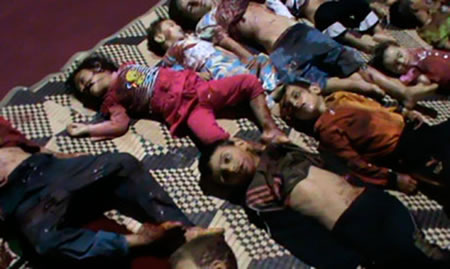
The bodies of children whom anti-government protesters say were killed by government security forces lie on the ground in Huola, near Homs May 26, 2012. (Photo: Reuters)
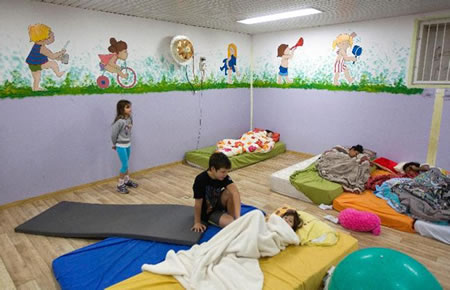
Israeli children wake up in the morning inside a bomb shelter at Kibbutz Reim, outside the central Gaza Strip November 18, 2012. Israel bombed Palestinian militant targets in the Gaza Strip from air and sea for a fifth straight day on Sunday, preparing for a possible ground invasion while also spelling out its conditions for a truce. Palestinian fire into Israel subsided during the night but resumed in the morning, with two rockets targeting Tel Aviv. REUTERS/Ronen Zvulun (ISRAEL - Tags: CIVIL UNREST POLITICS CONFLICT). CREDIT: REUTERS
“What did we do?”
This is our eternal question to insensate humanity
Which takes delight in abandoning us in the firing line
In their various wars of attrition
And making us always to suffer the brunt of their
Senseless rancour and vendetta resulting in wars of blame.
Today, the voices of children the world over ringing across
The vistas of time are asking, “What did we do?”
What did we do that you have continued
To maim, kill and destroy us
Thereby making unwanted barbeque of us?
From the Nazi holocaust through the Rwandan genocide;
The fratricidal killings in Uganda, the Democratic Republic of Congo;
The conscription into the army of the under aged children
In Sierra Leone and Liberia to fight wars they knew nothing about;
The Soweto massacre, the Dunblane and Beslan tragedies;
The Serbs and Albanians internecine war;
The plight of Kurdish children in and around the world,
To the wars in Darfur, Chechnya, Iraq and Afghanistan etcetera,
All the children of the world are asking, “What did we do?”
It is the children that are forced into
Child slavery doing menial jobs their ages
And spirits are not yet mature to do;
It is the children that are forced into child prostitution to satisfy
The lasciviousness of moral perverts –men and women-
Paedophiles and the likes and forced into child labour
When fortunes flee from families,
From age zero, humanity stripped us bare of justice,
Protection and a secured future,
Every day we cry out loud for a world where
Our rights matter and our innocence respected,
But who will listen to us?
Who will save us from this pain and anguish?
And now we intensify that cry from the Middle East
With our mangled bodies dripping blood,
We ask to know what wrong we did that Israel and Hezbollah
Mowed and hacked us down indiscriminately?
Israel and Hezbollah, what did we do to deserve this onslaught on us?
You bombarded and rocketed us mercilessly
Tearing us apart from our parents and leaving us
To wander aimlessly on the high way of life,
You violated our innocence
When your bombs and rockets
Sent us scampering away at midnight
As they landed on our houses
Killing many in their sleep, injuring
And deforming others for life,
Today, our blood again is gushing out
Like the cascading Niagara Falls
In a war we knew nothing about.
Sadly, it yet cannot guarantee world peace.
Again, what did we do, Syria, Israel and Hamas?
So what did we do that the world will not allow us
To live our normal lives and grow to become responsible adults?
What, what did we do that we cannot be left alone?
-JOHN ODEY ADUMA
British Chevening Scholar